The 9th Online Yemen Exchange September 25-October 6
We are pleased to announce our 9th online Yemen Exchange over 10 business days, September 25-October 6, 2023. Applications are now open:
https://sanaacenter.org/event/the-ninth-yemen-exchange
The Ninth Yemen Exchange is an intensive online version of the Yemen Exchange organized by the Sana’a Center and The Exchange Foundation. The course is designed to provide unique access to information, perspectives, updates, and analysis on Yemen for those seeking to develop a working background on the country as well as those already thoroughly versed in its dynamics. During the ten-day program conducted online, participants from around the world will listen to Yemeni analysts, academics, politicians, bureaucrats, business leaders, and international experts to gain insight and rare first-hand knowledge about the country from a wide range of perspectives. Participants will have the chance to both virtually engage with speakers during the sessions and connect with speakers individually after the Exchange.
The sessions themselves – totaling more than 30 hours – will dive into several specific areas, including but not limited to: Yemen’s multifaceted conflicts, socio-political dynamics, internal divisions and alliances among parties to the conflict, developments in the southern governorates, military and political developments on the ground, the status of various armed groups, gender issues, the regional battle for Yemen, the global response, the state of the economy, the UN-led peace process, and a variety of other topics.
Apply Now: The 21st Beirut Exchange Conference (In-Person) January 7-14
The BeirutEx is an immersive research conference that offers participants unique exposure to leading scholars, politicians & activists representing a range of different views.
View the full announcement here:
https://www.globalpoliticalexchange.org/beirut
Our upcoming BeirutEx is aimed at NGO practitioners, foreign diplomats, researchers, journalists & professionals in general interested in gaining a deeper understanding of Lebanon.
Request an application or scholarship information here:
info@globalpoliticalexchange.org
View speakers from our last Virtual BeirutEx December 2021:
https://youtu.be/bFK5Wj221u0
View the completed program of speakers from the last in-person BeirutEx in January 2018:
https://s3-eu-west-1.amazonaws.com/landingi-editor-uploads/wR0OnWBQ/BeirutExScheduleJanuary_2018.pdf

Nicholas Noe in Responsible Statecraft: “Sea border talks between Israel and Lebanon on verge of imminent collapse”
APRIL 12, 2022
Written by
Nicholas Noe
When President Biden appointed his personal friend and former Obama administration energy coordinator Amos Hochstein as his own energy envoy last summer, it seemed that the decades-old deadlock between Lebanon and Israel over their sea boundary, and potentially tens of billions of dollars in energy resources, might finally be resolved.
Hochstein was assumed to be trusted by the Israelis (he was born in Israel and served in the IDF in the early 1990s). He was perceived positively by some of the main Lebanese actors as a foe of a former U.S. envoy, Ambassador Frederic Hof, who had tabled a deal ten years before known as the “Hof Line” boundary that was widely seen in Lebanon as exceptionally unfair. And he came with a deep background in the complexities of the energy sector.
Perhaps most importantly, however, the Biden administration seemed hungry to claim a success in the Arab-Israeli conflict. Although a mutually agreed-upon sea boundary between Lebanon and Israel would fall far short of any Abraham Accord-type arrangement, such a deal would represent a UN-recognized boundary between a democratically elected Arab government and Israel. Given the extensive power of the armed Lebanese political party Hezbollah, which Israel considers its most formidable non-state enemy, the removal of a large offshore area from the regular military exchanges between the two sides onshore would also help to structurally diminish the prospects of another devastating war in the Middle East, something the Biden administration very much wants to avoid.
Unfortunately, eight months on, according to several senior Lebanese officials directly involved in the negotiations, the deal that Hochstein unveiled a few weeks ago in Beirut, one which apparently has Israel’s blessing, falls far short of Lebanon’s minimum acceptable position. As a result, the talks are in imminent danger of collapsing, perhaps in the coming weeks. Asked about this prospect, the State Department and U.S. Embassy in Beirut both declined to comment…
Read on via:
Maritime mediation between Lebanon and Israel: Looking beyond the Hof Line
▲
Posting Laury Haytayan’s important March 2021 article in the now-defunct Daily Star on Lebanon’s maritime boundary politics and history:
Maritime mediation between Lebanon and Israel: Looking beyond the Hof Line
Laury Haytayan
Autumn 2020
While Lebanese were expecting to hear the news of the formation of a new government that will save the country from its worst economic, financial, social and political crises, they were surprised to learn that the Lebanese authorities have agreed upon US mediation to start negotiations with Israel to resolve matters….A delegation surprised everyone with its legally grounded proposal. Lebanon did not recognize the already known 860-square-kilometer disputed zone but claimed 1,430 additional square kilometers that include a substantial part of the Karish field — supposedly in Israeli waters — in what was called the maximalist claim of Lebanon. Israel for its part was expecting an easy ride; it was expecting to negotiate over the 860 square kilometers; divide the area “fairly” and move on. After all, that was the proposal made by Ambassador Frederic C. Hof in 2012, when he was leading the mediation between both countries.
A BLAST FROM THE PAST: THE “HOF LINE”
You cannot mention the maritime border dispute between Lebanon and Israel without mentioning Frederic Hof. Lebanese know him as the designer of the so-called “Hof line” that gave Lebanon 55% of the disputed zone; a solution that did not succeed as Lebanon did not finalize the deal. This is why many of us read with great interest Hof’s narrative of what happened back in 2012 in an op-ed of The Financial Times and in a long essay published in Newlines Magazine after the launch of the negotiations. In this respect, we believe that it is only fair to the process that was undertaken a decade ago and
Download the original PDF here:
FACING UP TO FOREIGN INFLUENCE: HOW OUTSIDERS HELPED CREATE LEBANON’S CURRENT CRISIS
My @WarOnTheRocks article was prompted by a range of pieces since the 2019 protests in Lebanon that, in an admirable attempt to center Lebanese agency at the heart of the country’s problems, actually have largely erased the overwhelming, often negative role of external sides.
The piece is here: https://warontherocks.com/…/facing-up-to-foreign…/
I cite a number of authors-writing for Synapse, Chatham House to a recent NY Times piece. I would add another that needs to be examined from 2020: https://theguardian.com/…/lebanon-political-corruption…
In Khatib’s piece we thankfully at least have visible the role of external actors-including Western ones-but note how their roles are repeatedly minimized & softened. In her configuration: “The international community is partly responsible for sustaining this system…Foreign support is not the problem per se but rather when it is handed on a plate unconditionally.” And finally her call for the international community to abandon “their tacit support of a disastrous political status quo.” Even when she gently adds the notion that, perhaps, outside actors are “nurturing” the pathologies, the prospect of any malign self-interest isn’t raised. Sure, they “nurture”&”tacitly support” the disastrous system for stability, as she notes, but the fact of foreign actors & financial interests actively profiting from & maximizing local power is absent.
In this construction, France & the US as but two examples, have allowed a bad system to continue, but only because of their higher purpose of wanting stability. But this is only part of the case, one which properly understood sees outside actors not just as “tacitly supporting” but rather actively driving – and for quite a long time – Lebanon’s cancerous system.
A further missing piece in all of these articles: the responsibility of the Lebanese people themselves. There is now a renewed great debate in advance of the hoped-for elections about why or if again Lebanese will largely re-elect their leaders who are said to be disasters. This issue is critical to delve into for any robust understanding of the problems at hand.
Finally, my piece wasn’t able to flesh out some policy recs in the space I was given but in regards to my call for the US & Europe to bring carrots&sticks to bear in negotiating a mutual ceasefire over the next elections, the key move here, if an agreement btw the many external&internal sides involved in the electoral power struggle could be reached (this should be aimed for at least), would be for the US and Europe to focus resources on the integrity of the elections and electoral systems themselves – so NOT on candidates and sides which are purported to be more pro Western than others. This would mean breaking with the decades of practice of favoring “Our Man in Beirut” or specific sides and personalities (a practice which has repeatedly failed in any case) and focusing resources and capital on what matters in the long term – strong, accountable independent institutions-even if this means more figures succeed who are skeptical or critical of the West, or are just more nationalistic for example.
This approach (which of course should be combined w/policies addressing the “root causes” of conflict in the region!) takes flexibility and patience as well as admitting that the past approach was a failure for outside interests (like the US) as well as for Lebanon. The Biden admin recently sanctioned Jihad al-Arab, incredibly the first time in the modern era that the US sanctions one of its purported allies in the country (David Schenker said “all of them means all of them” but we know he+Trump didn’t actually mean it). Lets see if this is the start of a new approach. (I wrote about an alternative ahead of the ’20 election here: https://cadmus.eui.eu/handle/1814/68378
Final application deadline for the 20th Beirut Exchange Conference: November 15, 2021
Our final application deadline for the 20th Beirut Exchange Conference is Monday. Request an application via info@globalpoliticalexchange.org.
To view some of our more than (now) 50 speakers, visit: https://www.globalpoliticalexchange.org/beirut
The 20th Beirut Exchange Conference will take place online over 10 days, November 29-December 3 (Monday – Friday) and December 6-10 (Monday – Friday) from 4pm-7:30pm (Beirut Time) via Zoom. During the 35 hours of sessions, participants will have the opportunity to listen to and engage with leading academics, analysts, activists and politicians representing a wide spectrum of views on Lebanon.

Apply Now: The 20th Beirut Exchange Conference (Virtual)/November 29-December 3 & December 6-10, 2021
The list of some of our 20th Beirut Exchange Conference speakers is now available via our website. More than 45 speakers are confirmed thus far with more to come!
https://www.globalpoliticalexchange.org/beirut
Request an application via: info@globalpoliticalexchange.org
Apply Now: The 20th Beirut Exchange Conference (virtual)/November 29-December 3 & December 6-10, 2021
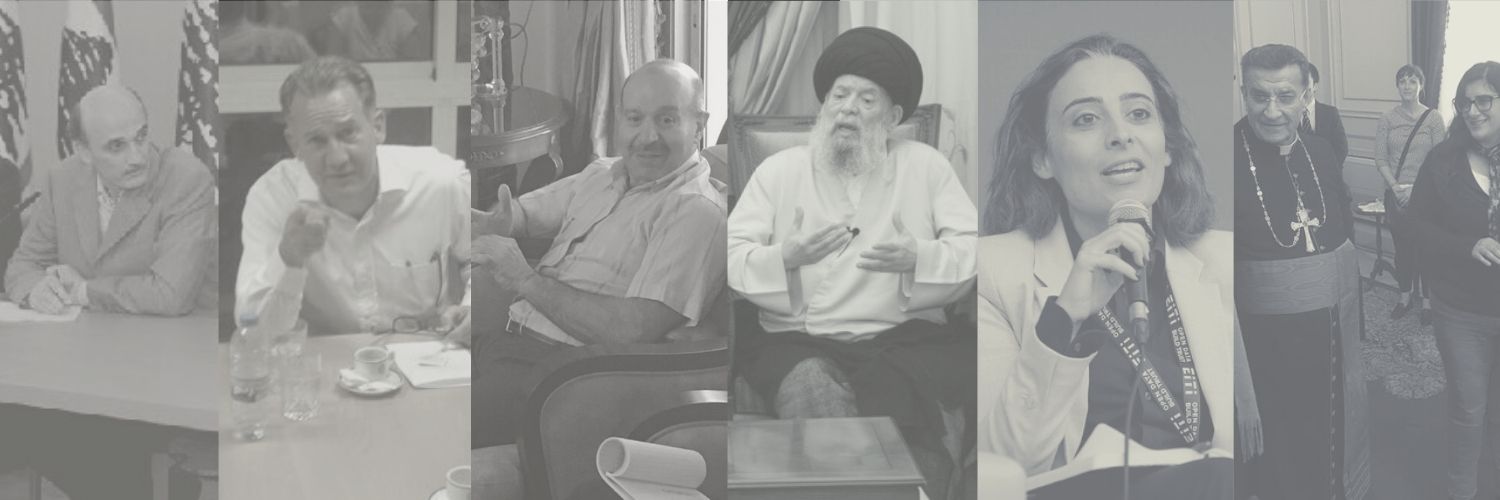
After an almost four-year hiatus, the 20th Beirut Exchange Conference will take place online over 10 days, November 29-December 3 (Monday – Friday) and December 6-10 (Monday – Friday) from 4pm-7:30pm (Beirut Time) via Zoom. During the 35 hours of sessions, participants will have the opportunity to listen to and engage with leading academics, analysts, activists and politicians representing a wide spectrum of views on Lebanon.
Read more and apply via:
Register Now: The Armenia Exchange, September 19-26 (In-Person)
The Armenia Exchange September 19-26, 2021, is an effort by the non-partisan, non-profit Exchange Foundation to promote a deeper understanding of Armenia as well as peacebuilding and security in the region. As such, the seven day, in-person conference will provide participants with an opportunity to meet, listen and engage leading social, political and economic actors from across the spectrum in Armenia, in both the capital Yerevan as well as for at least two days in the province of Syunik.
For more information or to apply, visit: https://www.globalpoliticalexchange.org/armenia
Our first Armenia Exchange will be held over seven days in Armenia and will open with an orientation briefing at 8pm on Sunday, September 19, at the conference hotel venue in Yerevan. After five days of meetings in and around Yerevan (including several outside of the conference hotel), on Friday, September 24, we will travel by bus to Syunik and conduct sessions with our speakers in the region. The return to Yerevan will be on Sunday, September 26, where we will close the Exchange by 1pm at the conference hotel.
In order to promote small group dynamics, the number of participants will be capped at 25. Sessions will be conducted on an individual rather than a panel basis and will generally allow ample opportunity for question time (translation into English will be provided when necessary). All sessions will also be held under the Chatham House rule, although we customarily work with our speakers to approve any quotes/references that participants may need for their own work.
Conference Fee Levels:
$800 — Student/Unaffiliated Researchers/Freelance Journalists
$1200 — NGO/UN/Media/Academic
$1500 — For-Profit/Government
All funding for the Exchange comes from only two sources: The participants themselves who pay the participation fee or scholarship recipients who benefit from individual, charitable contributions designed specifically to broaden the social, political and geographic diversity of each Exchange table. As such, there is no government, commercial or non-profit support, an aspect that we believe provides an objective platform for dialogue and understanding.
The Exchange Foundation currently has two Scholarships (covering the participation fee, travel/lodging and a per diem) available in each of two categories: A) An Armenian/Armenian origin person who can demonstrate a lack of institutional or self-funding ability; B) The Global Exchange Scholarship available for journalists or researchers who will deepen the social, political and geographic diversity of the Exchange and who can document a lack of institutional or self-funding ability. For any questions related to scholarships, email:
info@globalpoliticalexchange.org
Excerpt of Session Topics:
Nagorno-Karabakh – Speakers will discuss the prospects for peace and security for the people of Nagorno-Karabakh amid a tenuous ceasefire, and as questions linger as to the mission of the Russian peacekeepers, whose mandate is set to expire in four years. International legal experts will discuss the principles of territorial integrity versus self determination, while regional analysts and Yerevan-based foreign diplomats will examine what kind of settlement may be possible to secure the future of what remains of the unrecognized Nagorno-Karabakh Republic. Government officials will discuss the ways in which the war was conducted and the various outcomes as well as their strategy for a secure and peaceful Armenia and Artsakh.
Recent Armenian elections and the local landscape – Over the seven days of the Exchange, we will hear from leading figures in the government as well as the opposition and discuss their plans for the future of Armenia, broadening its foreign relations and securing its borders after a devastating war.
Prospects for trade – We will meet business leaders to learn about their challenges under three decades of blockade by Turkey and Azerbaijan, the possibilities for trade with both the East and the West and their desire for or aversion to greater connectivity with neighbouring Turkey and Azerbaijan. We will also learn about competing visions for regional trade, including Turkey’s desire for a transit corridor through southern Armenia, as well as Iran’s position against such a corridor — and revived interest in shoring up its links to Armenia.
Structural impediments to human development – Several sessions will be devoted to veteran investigative journalists and activists who can speak to the issues of corruption, human rights, security and socio-economic challenges that go well beyond the current focus on the warscape. To this end, we will also meet representatives of the minority Yazidi community to learn about the issues they face.
Interlocutors*:
- Office of the Prime Minister of Armenia
- Office of the President of Armenia
- Armenian Ministry of Foreign Affairs
- The Government of Nagorno-Karabakh Republic
- Armenian Opposition Representatives
- Syunik Elected Representatives
- Representatives of Armenia to the European Court of Human Rights
- Office of the Human Rights Defender/Ombudsman
- Minsk Group Co-Chair Nations
- The United Nations
- International Crisis Group
- Regional Studies Center
- The Caucasus Institute
- International and Comparative Law Center
- Armenia-Iran Strategic Cooperation Development Center
- TUMO Center
- Union of Advanced Technology Enterprises
- Aurora Humanitarian Initiative
- Anna Astvatsaturian Foundation
- * N.B.: Partial list only; the final agenda with confirmed speakers will be made available to admitted participants one month in advance of the Exchange.
For more information or to apply, visit: https://www.globalpoliticalexchange.org/armenia
The registration deadline–April 30–for the 14th Tunis Exchange is nearing!
Join us over 8 Thursdays & Saturdays, May 27-June 19, for 25+hours of sessions w/leading social, political, religious & economic figures from across the spectrum in #Tunisia. Request a registration link via:
info@globalpoliticalexchange.org or https://tinyurl.com/3ha34cus.
We also offer 2 scholarships: The Tunisian/Tunisian Origin Researcher who doesn’t have institutional/self-funding ability & The Global Exchange Researcher who can demonstrate need & will deepen the social, political & geographic diversity of The Exchange: https://tinyurl.com/3ha34cus
Some highlight photos from our last (yes, in-person) Tunis Exchange:


 The Mideastwire Blog